Why So Many Fences in Fayetteville Start to Lean
If you drive through older neighborhoods in Fayetteville, you will notice it quickly: fence lines that wave, posts that tilt a few degrees off plumb, and gates that no longer latch the way they used to. A leaning fence is rarely a cosmetic problem. It is usually the first visible sign that something below the ground has changed, and in this part of North Carolina, that something is almost always the soil or the wood itself.
Most homeowners assume a leaning fence means the whole structure needs to be replaced. That is not true. In many cases, the panels, rails, and pickets are still perfectly sound, and only a handful of posts need attention. Understanding why the lean happened is the difference between a repair that lasts another decade and a patch job that fails again within a year. The two dominant causes here are sandy soil and termite activity, and they often work together.
Sandy Soil Fence Posts: The Ground Moves More Than You Think
The Sandhills region is named for a reason. Much of the ground around Fayetteville is sandy, loose, and drains quickly. That sounds like a good thing, and for drainage it is. But sandy soil also shifts. It compacts unevenly after heavy rain, it washes out around post holes, and it offers far less lateral support than the dense clay soils found further west. A post set in sandy ground with a modest amount of concrete can stay perfectly straight for years, then begin to tilt after a few soaking storms or a dry summer.
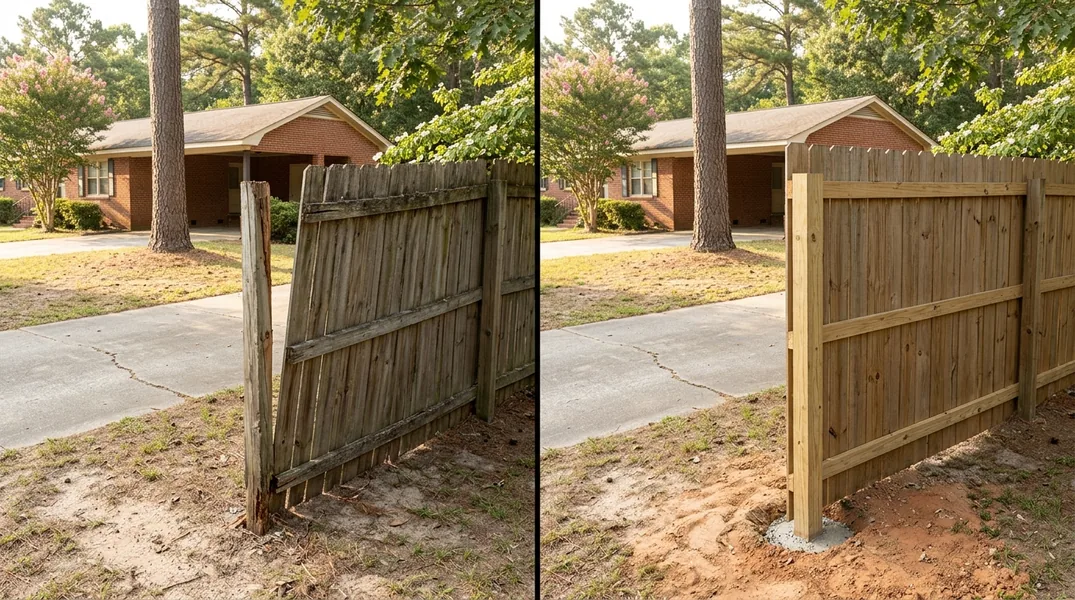
This is why sandy soil fence posts need a different approach than posts in heavier ground. The hole usually needs to be deeper and wider, the concrete collar needs more mass, and the base of the hole should be tamped and, in many cases, lined with gravel so water does not pool against the wood. When we repair a leaning post, we do not simply push it back and add dirt. We reset it properly for the soil conditions on that specific property, because a repair that ignores the soil will lean again. Homeowners in Hope Mills and other sandy pockets around the region run into this constantly.
Termites and Rotted Fence Post Repair: The Hidden Cause of the Lean
North Carolina is a high termite pressure state, and Eastern subterranean termites are active throughout the Fayetteville area. A wood post that stays in contact with moist soil is essentially an open invitation. Termites tunnel up from the soil into the post, hollow it out from the inside, and leave a thin shell of wood that looks fine from the surface. The post loses its structural strength long before it looks damaged, and once the first strong wind or saturated ground arrives, it tips.
This is why rotted fence post repair is not simply a matter of replacing a visibly broken board. A proper inspection means probing posts at the soil line, checking for softness, and looking for the mud tubes and hollow sound that indicate termite damage. When we handle fence post repair, we remove the compromised post entirely, set a new one with a barrier between wood and soil, and use pressure treated material rated for ground contact. If the surrounding posts show early signs of the same problem, we will tell you honestly so you can plan rather than get surprised later. If the damage is widespread, replacing a section with new Wood & Privacy Fence Installation is often more economical than repairing post after post.
Leaning Fence Repair Near Me: When to Call a Professional
Some fixes are genuinely DIY friendly. A single loose post on a short run, a gate that needs a new hinge, a picket that came free in a storm: those are reasonable weekend projects. But leaning fence repair becomes a different job when multiple posts are involved, when the fence is long or tall, or when the lean traces back to rot and termites. Pulling and resetting a post requires digging out old concrete, lifting the post without cracking the panels, setting the new post to the correct depth and plumb, and reconnecting everything so the line stays true. Done wrong, you end up with a fence that looks patched and fails again.
If you are searching for leaning fence repair near me and you are in the Spring Lake or Eastover area, the practical move is to get an inspection before the next storm season. A professional can tell you within a few minutes whether you are looking at a two post repair or a larger replacement, and that answer protects your budget. We are happy to walk the fence line with you and explain exactly what we find. You can request a free estimate or call Fayetteville Fence at (910) 900-5114 to schedule a visit.
How to Prevent the Next Lean
Prevention comes down to three things: keeping wood away from constant soil moisture, choosing the right material for the exposure, and checking the fence once a year. Ground contact is the enemy. Posts should be set with gravel at the base for drainage, concrete should be crowned slightly so water runs away from the wood, and soil should never be piled up against the post above the treated zone. Trimming vegetation back from the fence line also helps, since shaded, damp wood is exactly where termites prefer to work.
If you are planning a new fence rather than a repair, material choice matters. Vinyl & PVC Fence Installation sidesteps the rot and termite issue entirely, and it holds up well in sandy ground when the posts are set correctly. Aluminum & Ornamental Iron Fencing and Chain Link Fence Installation are also worth considering for property lines where wood is a maintenance burden. Whatever you choose, ask about post depth and soil conditions before the first hole is dug. If you want to compare options, our pricing page outlines typical ranges, and we are glad to talk through what makes sense for your yard.
Looking for a professional fence contractor in Fayetteville? Fayetteville Fence responds fast for all your fence needs.
Get a Free Quote