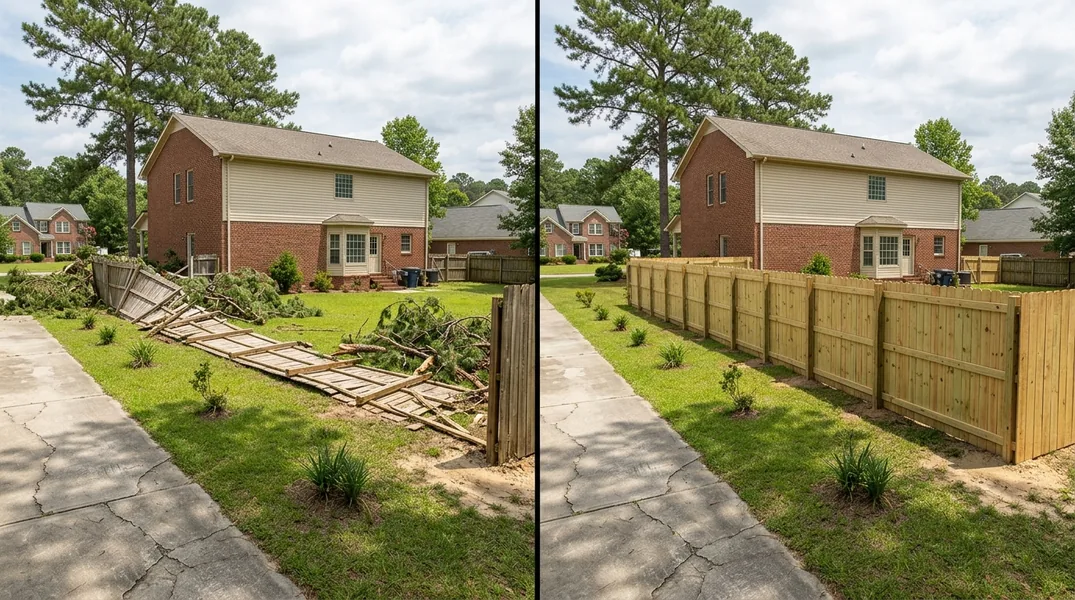
Your First Steps After a Storm Damages Your Fence
When a storm rolls through Fayetteville, the morning after can be a mess of downed limbs, standing water, and that sinking feeling when you look out back and see your fence leaning at a 45-degree angle. Before you start dragging panels to the curb, slow down and document everything. Your first job is safety: check for downed power lines near the fence line, and keep kids and pets away from any section that is leaning or partially collapsed. A fence that is still standing but unstable can fall without warning.
Once it is safe, grab your phone and take photos and video from several angles. Capture the whole fence line, close-ups of broken posts and split rails, and any debris that caused the damage (tree branches, fallen limbs, neighbor's trash cans). If a tree from your yard hit the fence, photograph the stump and the path of the fall. This documentation becomes the backbone of any insurance claim and helps your contractor write an accurate repair scope. Do not throw away damaged materials until your insurer has seen the photos or an adjuster has visited. If the fence blew down and is blocking a driveway or creating a safety hazard, make temporary repairs to secure the area, but keep receipts for anything you buy.
Does Homeowners Insurance Cover Fence Damage?
This is the question we hear most after a big storm, and the honest answer is: sometimes. Most standard homeowners policies cover fence damage caused by a covered peril, and windstorms and hurricanes are typically on that list. However, there are two big caveats. First, damage from flooding (storm surge, rising water) is usually excluded unless you carry separate flood insurance. Second, insurers often apply a separate deductible for wind and hail claims, which can be a percentage of your dwelling coverage rather than a flat dollar amount. That means a modest repair might cost less than your deductible, in which case filing a claim may not be worth it.
Coverage also depends on the cause. If a neighbor's tree fell on your fence during a storm, your policy generally responds, though your insurer may pursue the neighbor's insurer afterward. If the fence was already old and rotting before the storm, the adjuster will likely apply depreciation and pay only the actual cash value, not full replacement cost. Read your policy's declarations page and the section on other structures, since fences are usually covered there rather than under the dwelling itself. When in doubt, call your agent and ask a direct question: does my policy cover storm damage fence repair, and what is my wind deductible? Getting that answer in writing before you file saves headaches later.
Filing a Hurricane Fence Damage Repair Claim: A Practical Walkthrough
If you decide to file, start by calling your insurer's claims line and opening a claim the same week as the storm. Ask for the claim number and the name of the assigned adjuster, and keep a log of every call with dates and names. Your insurer will likely ask for photos, a description of the damage, and possibly a contractor's estimate. This is where a local pro helps: a written estimate from a licensed fence company gives the adjuster a clear, itemized scope, which speeds up the process and reduces back-and-forth. At Fayetteville Fence, we regularly provide detailed estimates for hurricane fence damage repair claims, and we can meet your adjuster on site if that is easier for you.
Be prepared for the adjuster's visit. Clear a path to the damaged sections, have your photos ready, and point out anything that is not obvious, like a post that is cracked below grade or a gate that will not latch because the whole run shifted. After the inspection, you will receive a settlement offer. Review it carefully: does it include removal and disposal of the old fence, new posts and concrete, and matching materials? If something is missing, you can submit a supplement with your contractor's estimate. Most straightforward fence claims in Hope Mills and the surrounding area close within a few weeks, but after a major hurricane, adjuster schedules can stretch to 30 to 60 days, so patience and follow-up matter.
Repair or Replace? Making the Call After Storm Damage
Not every blown-down fence needs a full replacement. If a single storm knocked out two or three panels and the posts are still solid and plumb, a targeted repair is usually the smart, cost-effective move. We see this often in older neighborhoods around Spring Lake, where one mature pine takes out a section and the rest of the fence is fine. In that case, matching the existing wood or vinyl and resetting a post or two gets you back to normal quickly. On the other hand, if the storm exposed underlying problems like rot at the base of multiple posts, loose concrete footings, or a fence that was already near the end of its lifespan, patching it may just mean another failure at the next big wind.
Age and material matter here. A pressure-treated pine fence in this climate typically lasts 12 to 15 years with good maintenance, and a storm at year 14 is a signal to plan for replacement rather than sink money into repairs. Vinyl and aluminum fences often survive wind better but can suffer cracked panels or bent rails that are replaceable individually. If you are weighing options, a professional inspection is worth the call. Our team can tell you honestly whether a repair will hold or whether replacement is the better long-term investment, and we can walk you through pricing for both paths so you can compare.
Storm Damage Fence Repair Near Me: Timelines and Choosing a Contractor
After a major storm, everyone with a truck suddenly becomes a fence contractor, and that is exactly when homeowners get burned. Choose a local company with a physical presence, verifiable reviews, and proof of liability insurance. Ask for a written contract that spells out materials, the number of posts and panels, cleanup, and a start date. Avoid large upfront cash deposits, and be wary of anyone who pressures you to sign on the spot or offers to handle your insurance claim for you. In North Carolina, public adjusters must be licensed, and a fence installer should not be negotiating your claim.
Timelines vary with demand. A small repair can often be scheduled within one to two weeks in normal conditions, but after a named storm, material shortages and a backlog of jobs can push full replacements out four to eight weeks. If your fence is a safety issue for pets or a pool, tell your contractor so temporary securing can be prioritized. For homeowners in Eastover and across the region, we recommend getting on a schedule early rather than waiting for the rush. Whether you need a quick fix or a full new Wood & Privacy Fence Installation, a Vinyl & PVC Fence Installation, or a Chain Link Fence Installation to replace what the wind took, the key is to get a written scope and a realistic date before work begins.
When to Call Fayetteville Fence for Storm Damage Help
If your fence is leaning, missing panels, or you are staring at a pile of lumber where a privacy screen used to be, call Fayetteville Fence at (910) 900-5114. We serve homeowners throughout the area and can assess storm damage, provide a written repair or replacement estimate, and coordinate with your insurance adjuster if you are filing a claim. We handle wood, vinyl, chain link, and Aluminum & Ornamental Iron Fencing, so whether you need a matching repair or an upgrade to something more wind-resistant, we can help you sort out the options.
The most useful thing you can do today is document the damage and get a professional eyes-on assessment before you commit to a repair method or a claim. A short conversation now can save you weeks of delay and prevent a second failure at the next storm. Reach out for a free estimate, and we will help you get your property secure and back to normal.
Looking for a professional fence contractor in Fayetteville? Fayetteville Fence responds fast for all your fence needs.
Get a Free Quote