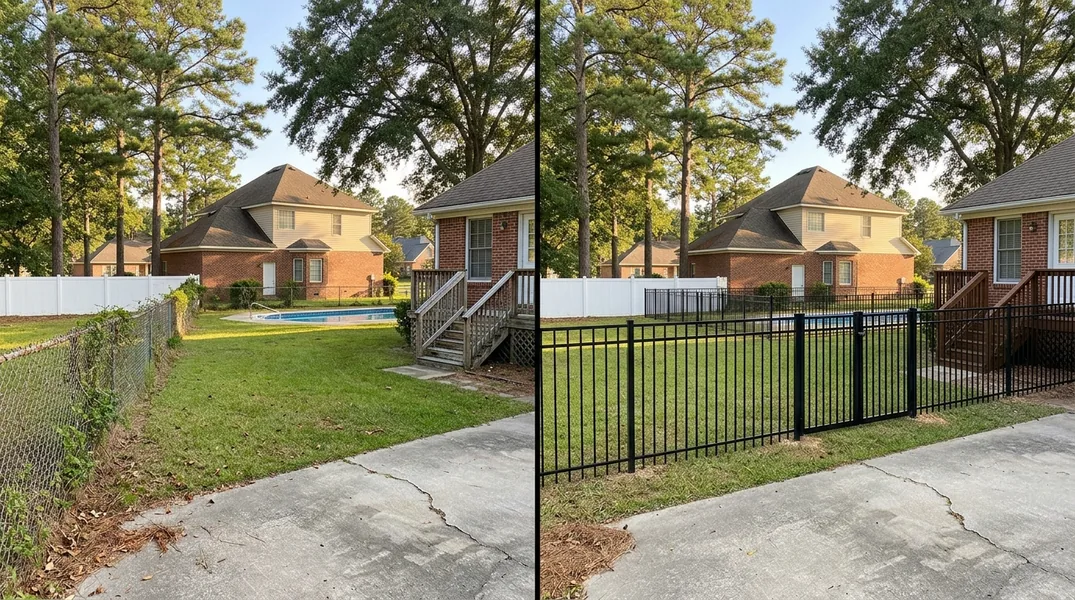
Why Pool Fence Rules Matter for Fayetteville Homeowners
If you own a pool in North Carolina, or you are planning to install one, the fence around it is not just a landscaping choice. It is a safety barrier governed by state and local rules, and it is one of the first things an inspector, insurer, or future buyer will look at. In a climate like ours, where the swimming season stretches from late spring into early fall, a pool gets heavy use, and that makes the barrier around it even more important.
North Carolina has adopted pool safety language through its residential building code, and Cumberland County and the City of Fayetteville apply those standards during permitting and inspection. The exact requirements can vary depending on whether you have an in-ground pool, an above-ground pool, or a hot tub, and they can change as codes are updated. That is why the smartest first step is to ask questions before anyone digs a post hole. A fence contractor who works in this market every week will know what local inspectors expect and can help you avoid a failed inspection or a costly rebuild.
Pool Fence Height Requirements and Barrier Basics
The most common question homeowners ask is simple: how tall does the fence need to be? In North Carolina, residential pool barriers are generally required to be at least 4 feet tall, measured from the ground on the side facing away from the pool. Many municipalities and insurers prefer 5 feet or more, and some HOAs require it. The barrier must also be designed so that it cannot be easily climbed, which means avoiding horizontal rails that act like ladder rungs and keeping gaps small enough that a young child cannot slip through.
Height is only part of the story. The barrier has to completely enclose the pool area, with no gaps at the bottom and no openings large enough to defeat the purpose. If your property line, house wall, or an existing structure forms part of the enclosure, it must meet the same standards as the fence itself. This is where a professional Wood & Privacy Fence Installation or a vinyl privacy system can be designed specifically around the pool rather than treated as an afterthought. A contractor can walk the yard, measure the actual enclosure, and recommend a style that satisfies the code while still looking good from the patio.
Self Closing Pool Gate and Latch Rules You Should Confirm
The gate is where most pool fence violations show up. North Carolina requires that any gate in a pool barrier be self-closing and self-latching, and that it close and latch reliably on its own from any open position. The latch must be positioned high enough that a small child cannot reach it from the outside, typically at least 54 inches above the ground, or located on the pool side of the gate in a way that is not accessible from outside the barrier. Hardware that sticks, sags, or fails to latch is a common inspection failure, and it is also a genuine safety hazard.
This is why the self closing pool gate deserves its own conversation with your installer. Cheap hinges and latches wear out quickly in our humidity and heat, and a gate that worked perfectly in March may not latch in July. Ask what brand of hardware will be used, whether it is rated for outdoor use, and how it can be adjusted over time. A quality gate assembly, installed plumb and square, is the difference between a barrier that protects your family and one that gives you false confidence. If you are comparing options, request a free estimate and ask the contractor to explain the gate hardware in detail.
Choosing the Right Pool Fence Material for a Fayetteville Yard
Once you know the code requirements, the next decision is material. Wood privacy fencing is a popular choice because it creates a solid visual barrier, blocks views from neighboring properties, and can be stained to match your home. The tradeoff is maintenance: in North Carolina humidity, wood needs sealing and occasional repair to stay sound. Vinyl and PVC fencing has become a favorite for pool enclosures because it resists moisture, never needs painting, and cleans up with a garden hose. Both options can be built to meet height and gap requirements, and both can be fitted with code-compliant self-closing gates.
For homeowners who want security without a solid wall, Aluminum & Ornamental Iron Fencing is a strong option, provided the pickets are spaced closely enough to prevent passage. Chain Link Fence Installation is the most budget-friendly route, and it can be paired with privacy slats if you want more screening. Whichever material you choose, the fence must be installed with the pool code in mind from the start, not adapted afterward. Homeowners in Hope Mills and Spring Lake face the same rules, and a local installer can confirm what each jurisdiction requires.
Pool Fence Installation Near Me: What to Ask Before You Sign
When you start calling contractors for pool fence installation near me, bring a short list of questions. Ask whether the company has pulled pool fence permits in Cumberland County before, how they handle inspection scheduling, and whether their quote includes gate hardware rated for self-closing and self-latching operation. Ask for the proposed fence height in writing, along with the gap spacing between pickets and the distance from the ground. A contractor who answers these questions confidently and in plain language is likely to build a barrier that passes inspection the first time.
Also ask about the timeline and the site. Pool fences often have to be built around existing concrete, landscaping, and equipment pads, and that affects post placement and pricing. Get a written scope that lists materials, hardware, and cleanup. Finally, confirm the warranty on both the fence and the gate hardware, because the gate is the part that takes the most abuse. A short conversation up front saves weeks of frustration later.
Work With a Local Pool Fence Contractor in Fayetteville
Pool fence rules are detailed, and they are enforced. Rather than guessing at height, spacing, and gate hardware, work with a team that installs pool barriers in this area every week. Fayetteville Fence serves homeowners across Fayetteville and nearby communities including Eastover, helping families choose materials and designs that meet North Carolina pool fence code requirements while fitting the look of their property.
Before you buy materials or schedule a dig, call Fayetteville Fence at (910) 900-5114 to talk through your pool layout and inspection questions. You can also request a free estimate online and get a clear plan for a barrier that is safe, compliant, and built to last through many swim seasons.
Looking for a professional fence contractor in Fayetteville? Fayetteville Fence responds fast for all your fence needs.
Get a Free Quote